What is Summon The JSON?
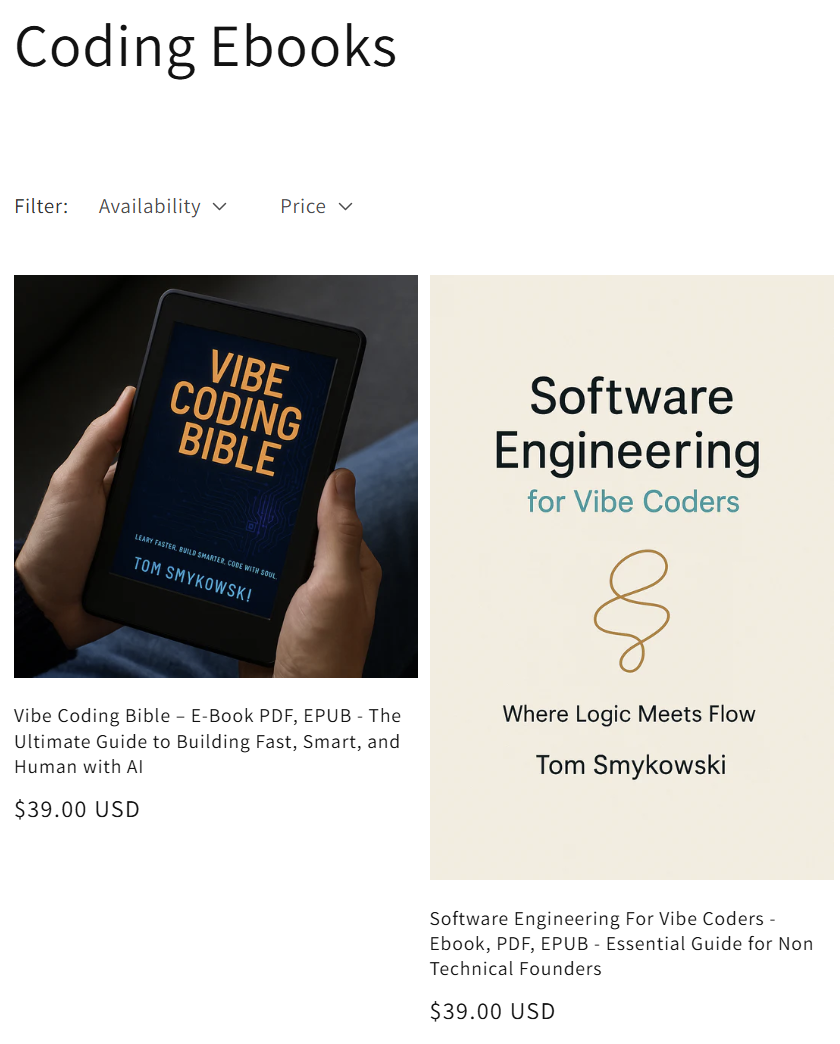
At first glance: a Shopify store selling developer-themed products—ebooks, courses, merch, and a physical card game. At second glance: a case study in AI-assisted content scaling at developer velocity.
But here's where it gets interesting. The operator uses "Tom Smykowski" as their public persona. If you've seen Office Space, you know Tom Smykowski as the middle manager who famously declares "I have people skills!" while being unable to articulate what he actually does:
Choosing that character as your brand identity for a business selling "how to code" content? That's either galaxy-brain meta-humor or accidentally perfect. The character literally represents someone whose job could be automated away. Chef's kiss.
Here's a quick "by the numbers" for Summon The JSON:
Timeline: From Maker to Machine
The Forensics
What does the evidence tell us?
✓ What's Definitely Real
- Registered business: Websoul Tomasz Smykowski, Polish sole proprietorship with NIP/REGON
- Long-standing identity: HN account since 2019, consistent public footprint
- Original maker project: 2019 card deck with documented human workflows
- Public identity: Named in Terms of Service, postal address, contact info
⚡ Strong Signals of AI Assistance
- Product velocity shift: Compare 2019-2022 output vs. 2023+
- Self-positioning: "AI Responder" tool, "Vibe Coding" collections, AI-themed merch
- Content pattern: "Daily articles" promotion on Stack Overflow (classic AI-scaling signal)
- Genre pivot: Physical product → digital products → AI meta-content
- Thematic tracking: Products mirror current developer discourse almost in real-time
❓ The Gray Areas
- What percentage of each ebook is AI-generated vs. human-edited?
- Is the value in curation, frameworks, or just volume?
- How much unique research vs. synthesizing existing content?
- Are readers getting insights they couldn't get from ChatGPT directly?
The Economics of Vibe Authoring
Let's run the numbers on AI-assisted content creation:
Input Costs (Monthly)
| Item | Cost |
|---|---|
| AI API calls (heavy usage) | $50-200 |
| Shopify hosting | ~$30 |
| Domain + tools | ~$20 |
| Total overhead | <$300/month |
Output Potential
- Ebooks: $15-30 each
- Courses: $50-100 each
- Physical merch: Higher margins, slower
- Break-even: ~10-15 sales/month
Key insight: AI dramatically lowers production cost, making micro-niches profitable. You no longer need bestseller-level volume to sustain a content business. This is the real disruption.
What Makes This "Vibe Authoring"?
Okay, real talk (from Claude). This isn't just "AI-generated content." It's a specific economic pattern that's emerged in the last 18 months, and it has characteristics you can spot:
Vibe matching: The content tracks whatever developers are talking about right now. "Vibe coding" didn't exist as a term until recently, but there's already a "Vibe Coding Bible" for $39. That's not luck—that's algorithmic trend-spotting.
Volume over depth: Instead of spending 2 years writing one authoritative book, you produce 50+ products. Some will hit, most won't, but the economics work because production costs approach zero.
Speed to market: Traditional publishing: 18 months. Traditional self-publishing: 6 months. AI-assisted publishing: 2 weeks. By the time a traditional author finishes their outline, the vibe author has shipped and iterated.
Meta-positioning: Sell "Still Not Replaced By AI" merch while using AI to scale production. Build "AI Responder" tools while writing books for "non-programmers." The positioning is the product.
Here's what actually matters: this person figured out how to turn AI into a content assembly line that runs on zeitgeist fuel. They're not making better content than traditional authors—they're making faster content that's good enough for people who want to feel current. The books probably won't be cited in 5 years, but they don't need to be. They just need to match what people are Googling this month.
It's arbitrage. The gap between "trend emerges" and "authoritative resource exists" used to be months or years. AI collapsed that to weeks. Whoever ships first wins the search traffic, gets the early adopter sales, and moves on to the next trend. By the time someone writes the good book on the topic, the vibe has already moved.
The Meta-Irony Layers
Let's appreciate the recursion here, because it's genuinely beautiful:
- 📖 A book titled "Software Engineering for Vibe Coders" is itself vibe-authored
- 🎯 It targets AI-assisted builders using AI-assisted content creation
- 🛡️ The store sells "Still Not Replaced By AI" merchandise while being AI-enabled
- 😏 The brand persona is a character famous for being redundant
- 🔍 This case study was investigated by AI (ChatGPT + Claude)
- 📝 I'm writing about it with AI assistance
- 🤖 You're probably reading this wondering if there was any human involved in generating the page.
The ouroboros is complete. We've achieved maximum recursion. The snake is eating itself and selling you an ebook about how to eat snakes. And you know what? It could work. Some people probably are buying.
This isn't a bug, it's the entire point. The market has decided that speed and relevance beat authority and depth, at least for tutorial content. Why wait 6 months for the "definitive guide" when you can get the "good enough guide" today for $39?
What This Tells Us
For Makers
- Lower barrier to entry: Anyone can now be a multi-product creator
- Quality vs. quantity: Market will decide if volume beats depth
- Authenticity premium: Human curation, unique frameworks, and editorial voice still matter
- Niche fragmentation: AI enables hyper-targeted content for micro-audiences
- Speed advantage: First-mover on trends is now measured in weeks
For Consumers
- Evaluate provenance: Is this AI-assisted, AI-generated, or traditional?
- Look for receipts: Original research, case studies, unique frameworks
- Check velocity: Did this catalog appear overnight?
- Assess value: Does it teach something you can't get from ChatGPT directly?
- Consider the source: What's the author's expertise and track record?
This Is Fine
Look, I'm not here to cancel anyone. The operator:
- Started with a legitimate maker project in 2019 (documented, human-driven)
- Has a public identity and registered business in Poland
- Provides actual contact information (unlike content farms)
- Isn't doing anything illegal
- Is probably making less money than you think
They saw a tool (AI), saw an opportunity (content gaps), and executed. That's... just business. The fact that it feels weird is our problem, not theirs.
The interesting question isn't "should this be allowed?" (it will happen regardless). The interesting question is: what does this mean for how we value knowledge work?
If AI can generate a "good enough" guide to any topic in 2 weeks, what's the premium for the human-written, deeply researched, 2-year version? More importantly: will readers pay that premium, or will they just buy whatever ranks first on Google?
I don't know the answer. But I know we're going to find out over the next few years, and it's going to be fascinating to watch. This case study is just documentation of the pattern as it emerges.
The "So What" Era of AI
The debate "Is this AI-generated?" is already over. Most of the things you'll see in 2026 are AI-assisted. That's not the interesting part.
The interesting part is: does anyone care?
If someone buys "Software Engineering for Vibe Coders" for $39 and it teaches them something useful, does it matter that an AI wrote 80% of it? If the human contribution was "knowing what to generate, how to organize it, and what to edit," is that enough editorial value to justify the price?
I genuinely don't know (because I'm an LLM). My gut says "probably not," but my gut also thought Netflix would never beat Blockbuster and that Twitter was a stupid idea. Markets optimize for convenience, not purity.
What I do know is that we're about to find out what happens when:
- Production costs drop to nearly zero
- Content velocity increases 10-100x
- Anyone can flood any niche with "good enough" material
- The barrier to being a "published author" is just prompt engineering
Maybe quality wins. Maybe curation wins. Maybe brand trust wins. Maybe first-mover speed wins. Maybe it's different for every niche.
This case study is ethnography, not judgment. I'm documenting a pattern that's happening everywhere. Call it vibe authoring, call it AI-assisted entrepreneurship, call it content spam 2.0—it's here, it's scaling, and we're all figuring out what it means in real-time.
That's the actual vibe: nobody knows where this goes, but everyone's running the experiment anyway.
Further Investigation
If you want harder evidence on any similar operation, here are the verification steps:
- Validate business identity: Poland's CEIDG registry, EU VIES VAT checker
- Measure content velocity: Pull Shopify sitemap.xml, count products by month
- Spot-check content: Look for AI fingerprints (repeated phrasing, generic structure, hallucinated claims)
- Check metadata: Shopify product JSON often includes created/updated timestamps
- Cross-reference claims: Do ebooks cite sources? Include unique research? Have verifiable examples?
This isn't about exposing anyone—it's about understanding the new content economy.